Dr. Nguyen Vinh Son: “Education must lead technology to provide guidance and ensure that technology serves humanity”
At the seminar "Guidelines for implementing Artificial Intelligence education content for K-12 students - Creating digital citizens in the AI era," held this past February, Dr. Nguyen Vinh Son – Vice Chairman of the Education Council of the Wellspring International Bilingual School System and General Principal of Wellspring Hanoi – shared his insights on introducing Artificial Intelligence education into schools.
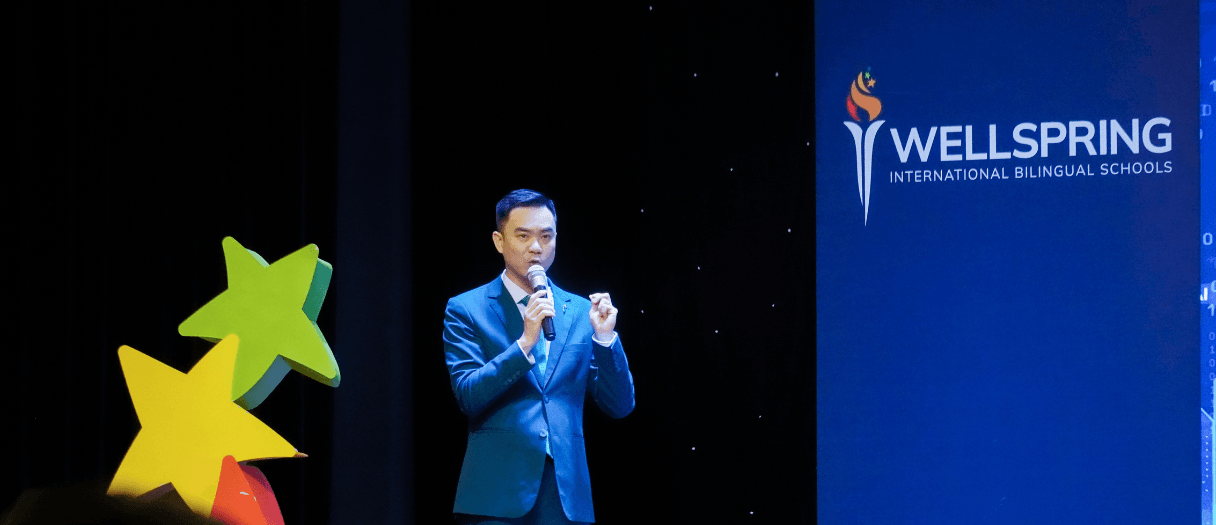
With nearly 30 years of experience in domestic and international education (as a lecturer at Hanoi National University of Education, Coordinator for the PhD Training Project between HNUE and KU Leuven, Secretary of the Party Cell for International Students in Leuven, Belgium, and Member of the University Council of Hanoi National University of Education for the 2025-2025 term), Dr. Nguyen Vinh Son emphasizes the vital role of education in building digital resilience for today's younger generation.
According to Prof. Dr. Le Anh Vinh - Head of the Vietnam Institute of Educational Sciences, under the Ministry of Education and Training’s roadmap, AI will be piloted in the general education system starting from the second semester of the 2025-2026 school year. The implementation will be executed flexibly through three main forms: integration into existing subjects, developing independent study modules, or organizing AI clubs and extracurricular activities.
In this context, Dr. Nguyen Vinh Son - General Principal of Wellspring Hanoi International Bilingual School, a pioneer in K-12 AI education, offers a practical perspective: introducing AI into schools should not stop at investing in equipment or teaching technical skills. He states: “If education only teaches technical operations, we will create a generation dependent on technology rather than one that masters it.”
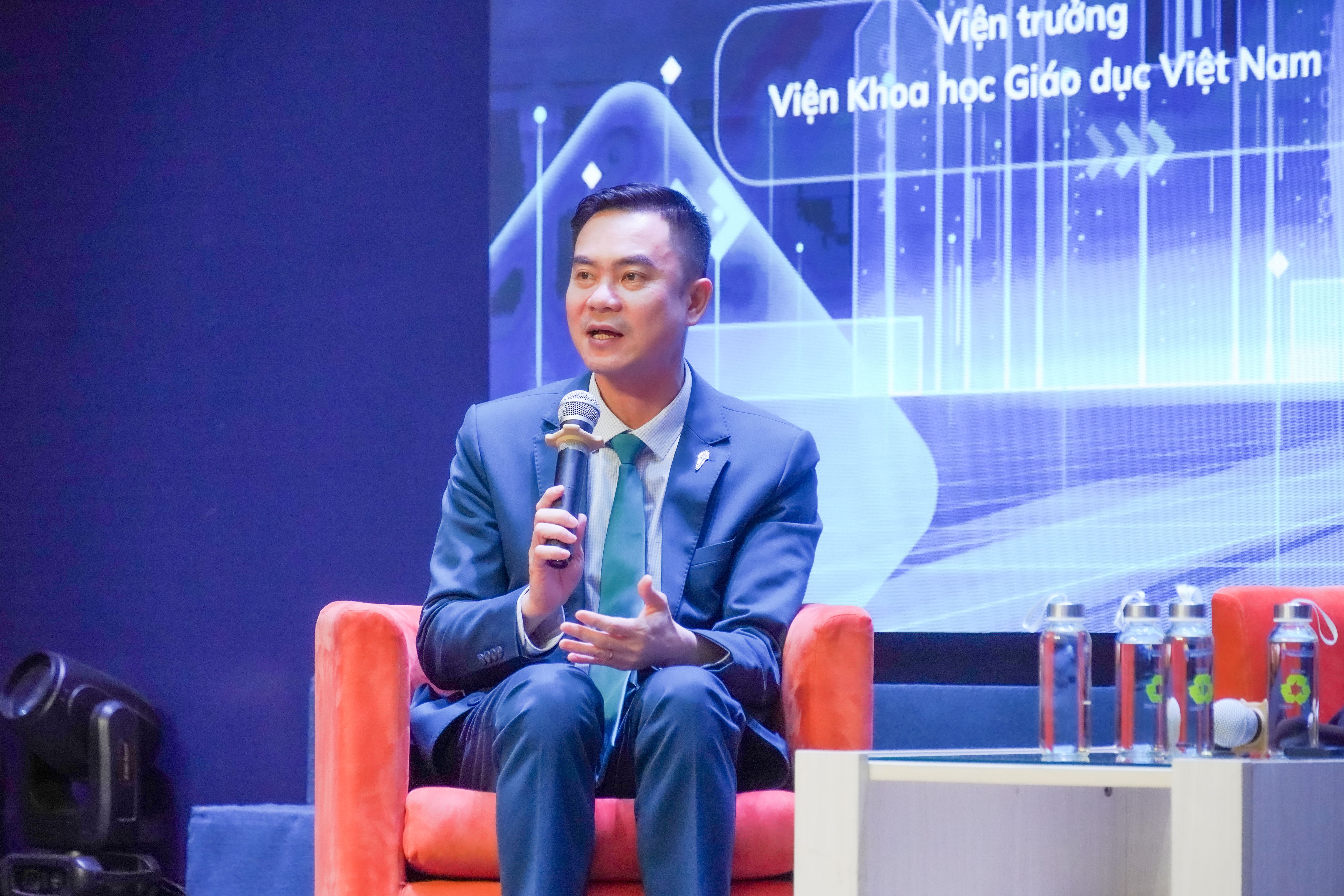
Image 1: Dr. Nguyen Vinh Son sharing at the event about the role of education in the digital age.
The new role and focus of education in the AI era
Currently, artificial intelligence is no longer an isolated trend but has become a foundation with deep and broad impacts on the economy, society, and the labor market. AI is increasingly applied in production, finance, media, healthcare, and education. Many businesses are forced to restructure their operational models, while nations are urgently finalizing legal frameworks to manage risks and effectively exploit the potential of this technology.
Facing this reality, Dr. Nguyen Vinh Son believes that education faces an urgent task: preparing digital competence for the future generation. "Digital competence" here is not merely knowing how to use AI tools, but understanding how they operate, recognizing their limitations, and using them responsibly.
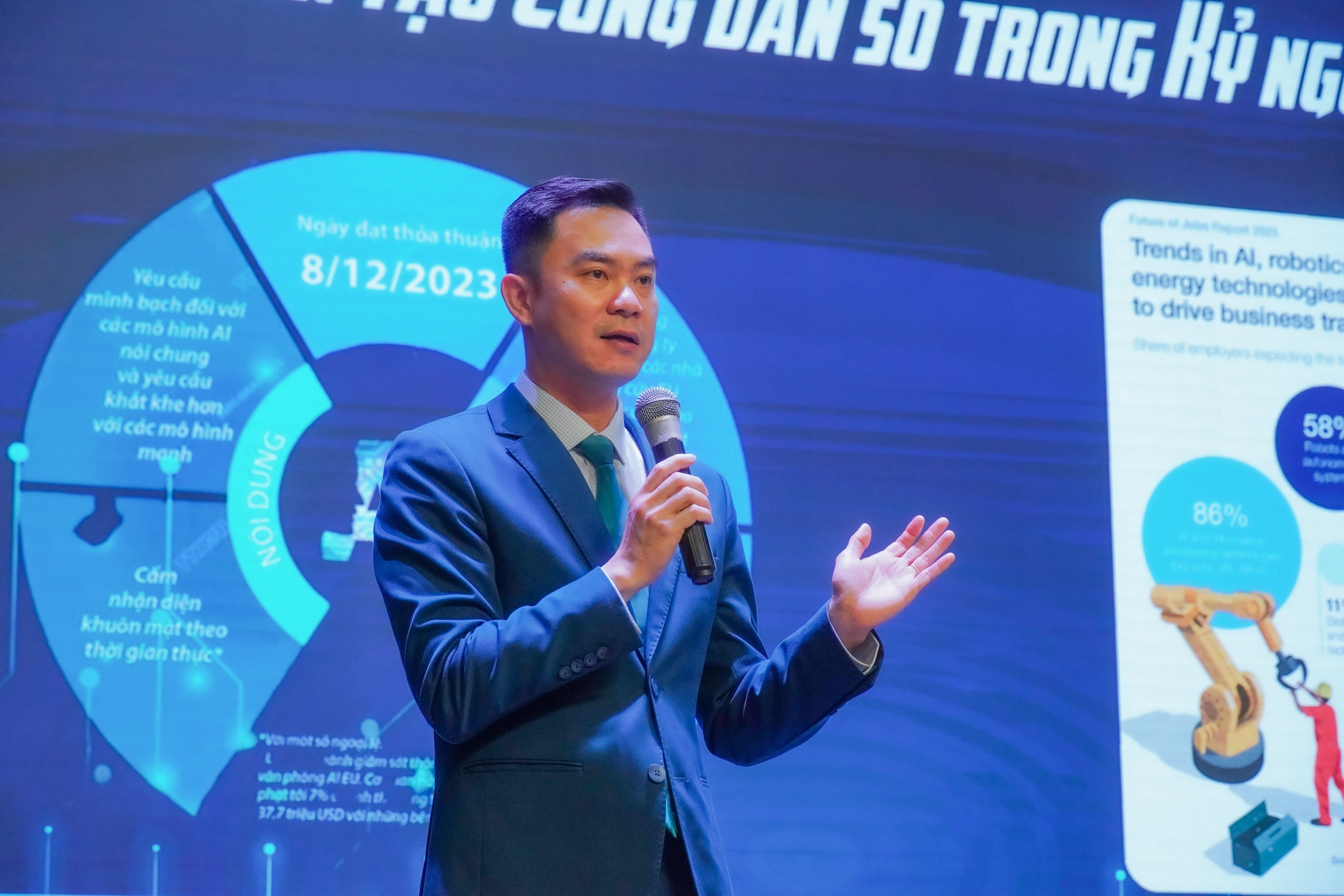
Photo 2: Dr. Nguyen Vinh Son - The new task of education is to prepare digital skills for the future generation.
Wellspring Hanoi’s representative argues that the focus of modern education is to develop critical thinking skills, the ability to verify information, and ethical awareness when interacting with intelligent systems. He emphasizes: “AI can process data faster than humans, but if humans do not become more profound and alert, technology may diminish thinking rather than enhance value.”
Thus, one of the most dangerous threats of AI is not that it replaces humans, but that humans lose the ability to think and create because they are too dependent on AI. When students get used to letting AI write essays, solve math problems, or analyze data without understanding the essence, the learning process, despite being shorter in time, becomes "poorer" in depth.
Therefore, Dr. Nguyen Vinh Son stresses: “Education cannot chase after technology. Education must go ahead to provide guidance and direction, ensuring that technology serves humans rather than controlling them.”
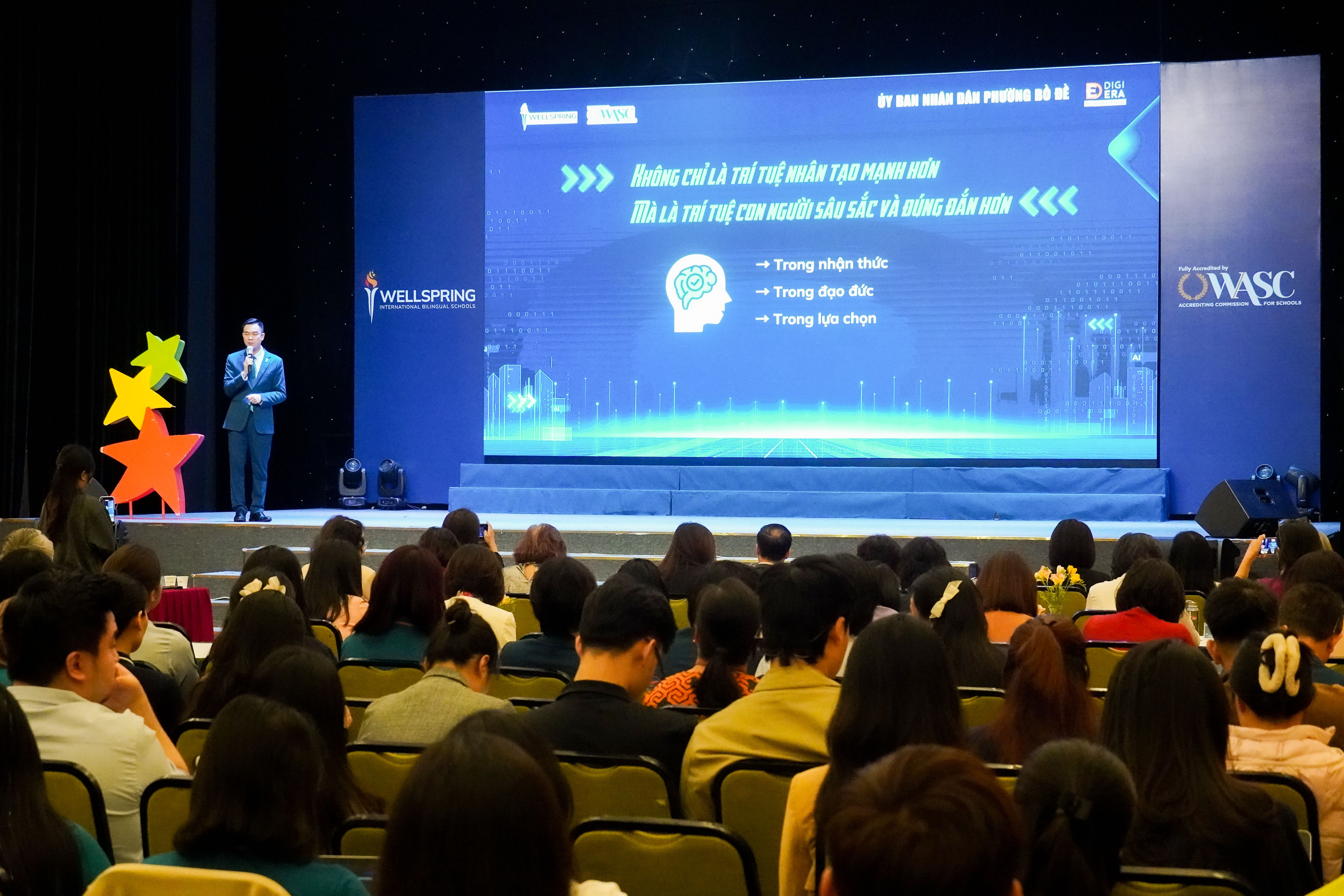
“Education cannot chase after technology. Education must go ahead to provide guidance and direction, ensuring that technology serves humans rather than controlling them.”
To help students "master" AI: Starting with changing teaching methods
Based on the practical implementation at Wellspring Hanoi, Dr. Nguyen Vinh Son believes that the effectiveness of AI training at the K-12 level depends largely on how each school designs its learning environment. According to him, AI must be developed and used on a foundation that respects human dignity, ensuring fairness, transparency, and social responsibility. This is not just a story about technology, but also a story about ethics and long-term development.
“We need to build a generation of young people who know how to be critical of the flow of information, who know how to ask questions of algorithms, who have the ability to distinguish between real and fake in the digital environment, and who are clearly conscious of their responsibility in every action on the internet,” he said.
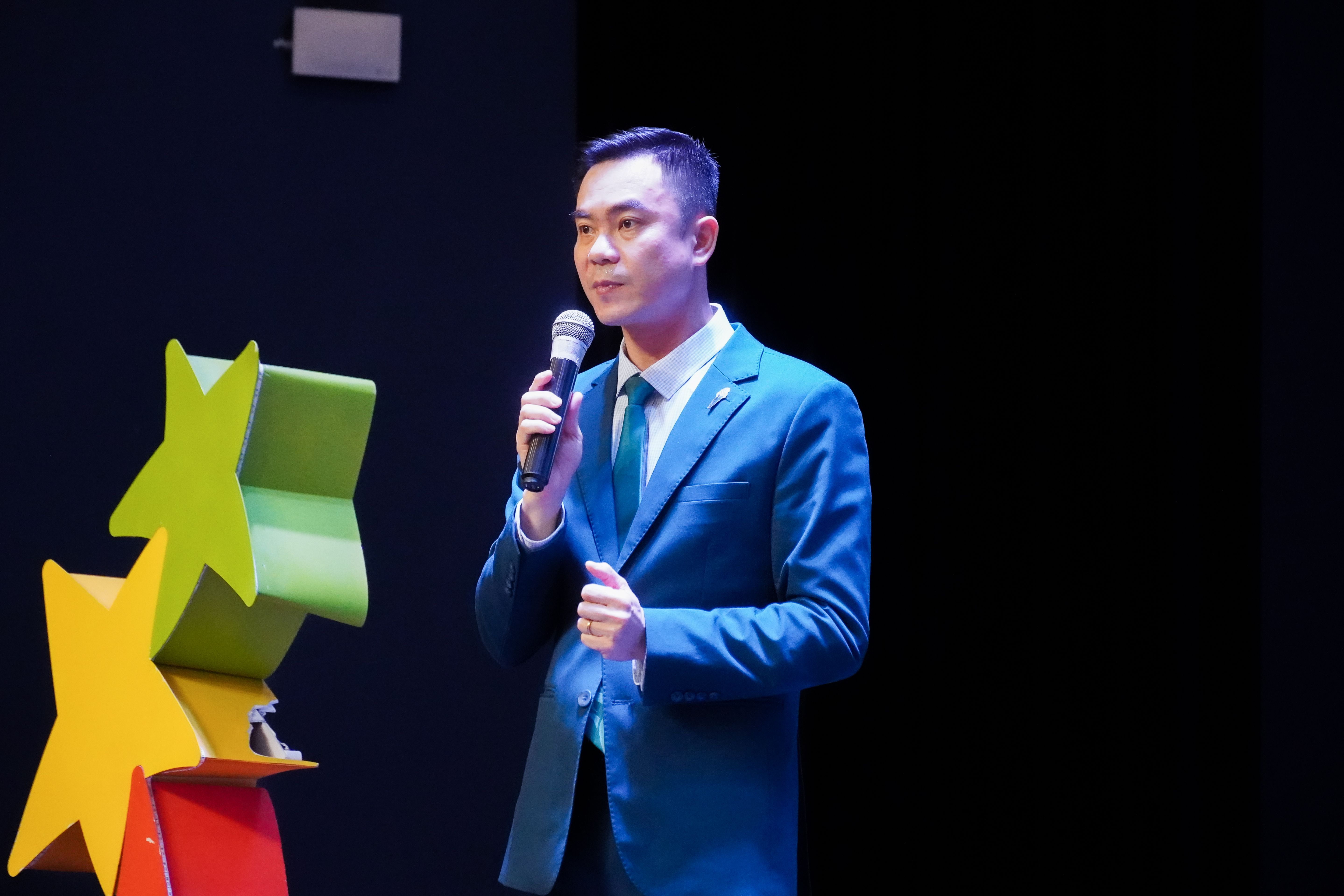
"AI must be developed and used on a foundation that respects human dignity, ensures fairness, transparency, and social responsibility."
Instead of banning it, according to Dr. Son, schools need to build clear principles regarding the use of AI in learning: when it can be used, what it is used for, and which parts of the work students are required to do themselves. Teachers also need training to understand AI correctly, so they can guide students to exploit this tool as a learning assistant, rather than seeing it as a tool that "does the work for them."
Practical implementation at Wellspring Hanoi shows that the school proactively researched and tested AI content from July 2025, before the official pilot framework of the Ministry was issued. In the 2025-2026 school year, the "Empower AI: A Future-Ready Program" was integrated into the official curriculum from Grade 1 to Grade 12.
The AI education program is a specialized, international-standard, and personalized curriculum for Wellspring Hanoi students. It is based on proprietary AI educational initiatives from the Massachusetts Institute of Technology (MIT) – the world’s leading university in technology and educational innovation, renowned for over 160 years of leadership in research, innovation, and STEM education. It also combines the AI competency framework from UNESCO (The United Nations Educational, Scientific and Cultural Organization), which focuses on critical thinking, digital ethics, creativity, and the ability to use AI for human benefit. UNESCO is headquartered in France and operates in over 190 countries, serving as a global leader in sustainable and humanistic educational policies.
Notably, the Empower AI: A Future-Ready Program has been comprehensively appraised, from academics to suitability and practical implementation capability, by an Education Council consisting of 100% members holding Doctoral degrees, in coordination with the School’s Pedagogical Council and subject matter experts in the fields of education and technology.
Proactively building and standardizing content helps the school accumulate experience in lesson design and classroom organization, as well as control the use of AI effectively. By utilizing technology, AI education at Wellspring Hanoi is not just an independent subject in ICT classes (International program) but is flexibly integrated into many subjects, projects, and experiential activities across both the Vietnamese and International programs. The school is a pioneer in applying technology and AI as a core part of its innovative educational philosophy, closely linked to academics, life values, and well-being orientation.
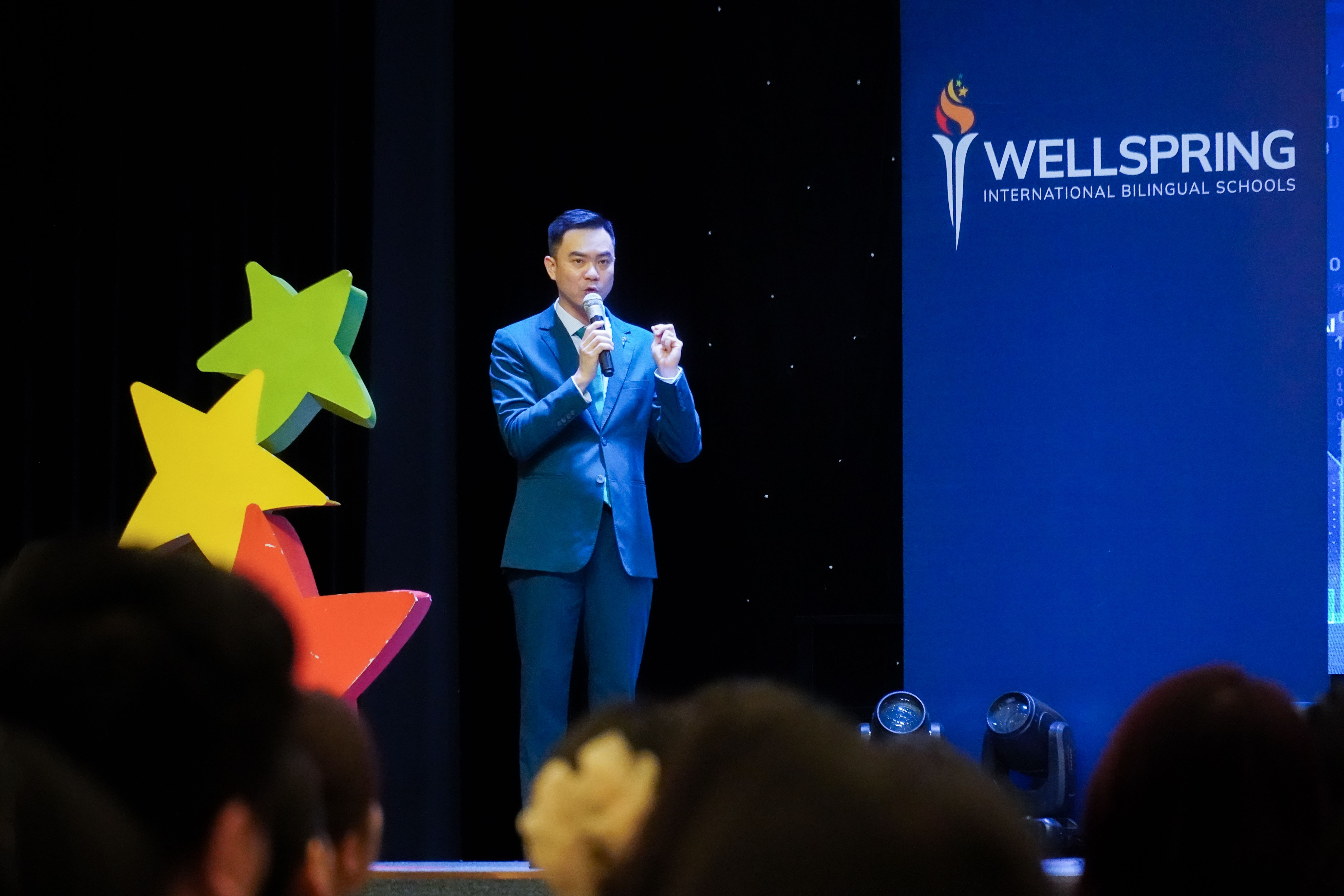
“Creating digital citizens is not just about teaching technology, but teaching how to master technology. AI must become a partner that elevates humans, not something that replaces or controls them,” Dr. Nguyen Vinh Son once again emphasized.
AI will continue to develop at a faster rate than any forecast. In this context, piloting this field in general education is a timely step to enhance the adaptability of the younger generation in the digital environment. The insights from the seminar at Wellspring Hanoi have provided a methodical approach to AI for educational institutions, thereby promoting the transformation of policy into specific actions in teaching organization and building an educational environment suitable for the 4.0 era.
However, to realize this cannot be a journey for a single school. Only when schools, families, and the community walk together can we prepare the younger generation to step into the future with knowledge, character, and responsibility – Dr. Son emphasized.